

Food processing industry
Special coatings for extreme conditions: Maximum performance and reliability for the demanding energy industry.
The initial situation
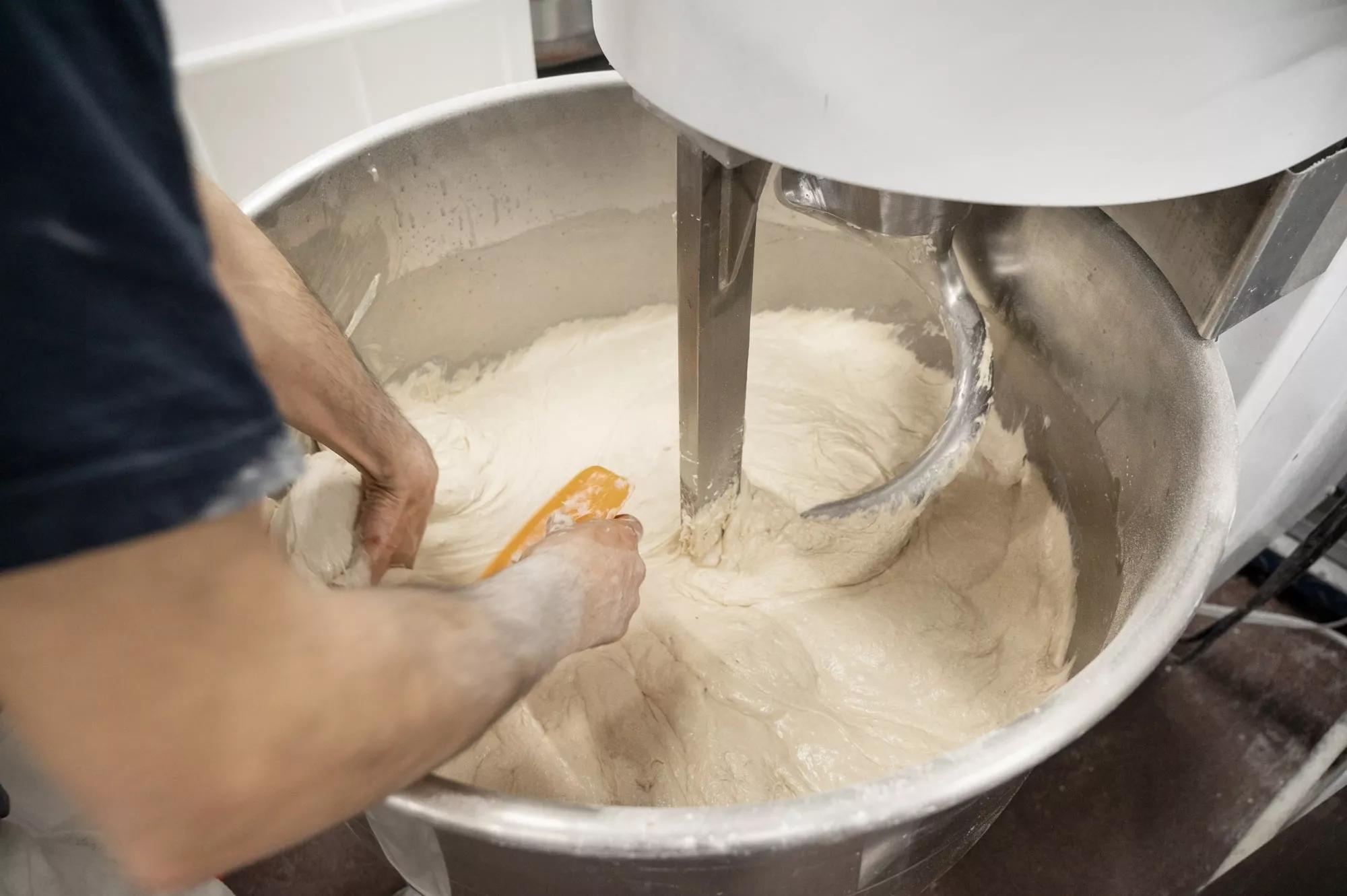
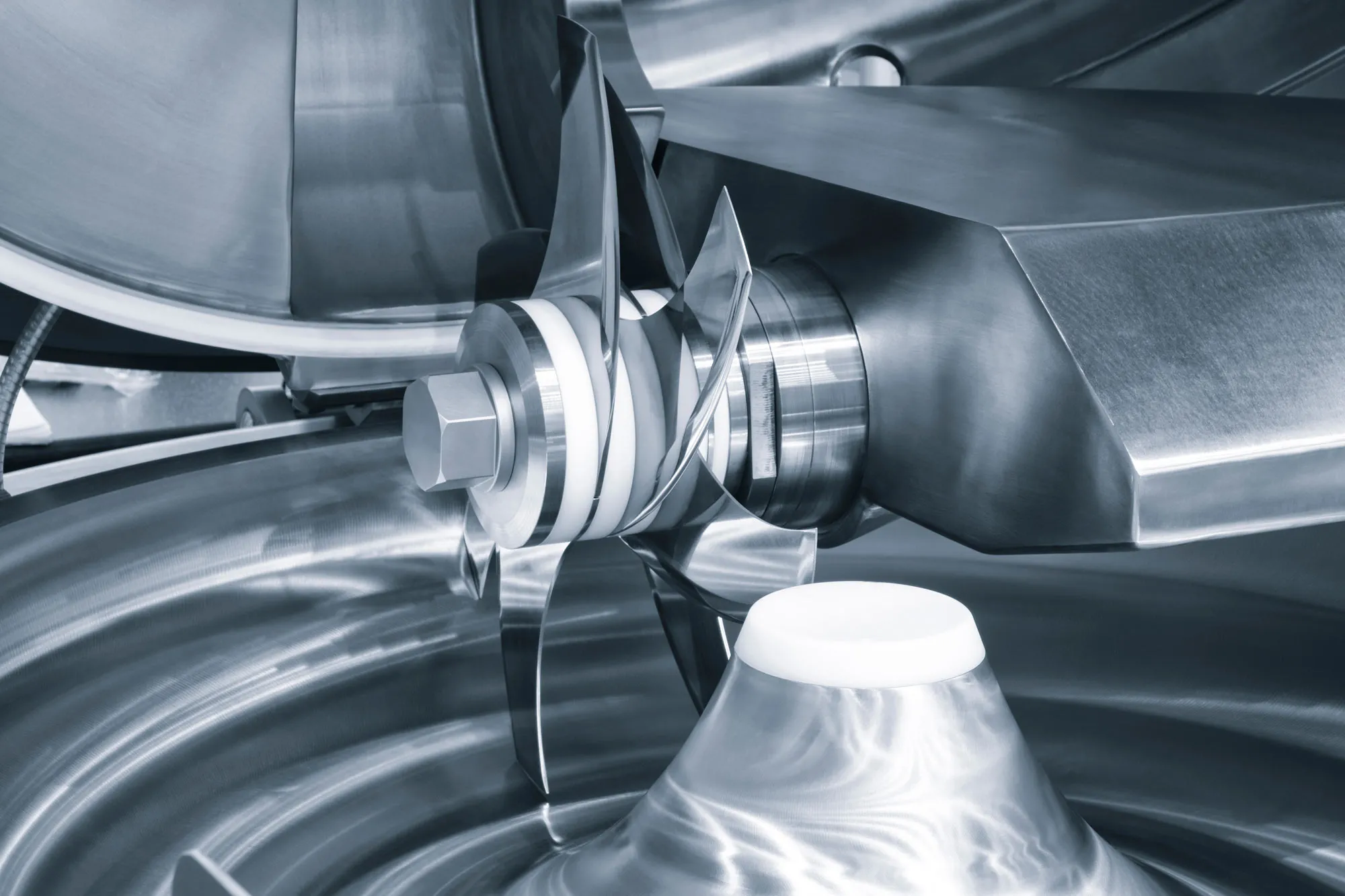
Seals mostly made out of PTFE compounds are used in the sealing areas of motor units of for example mixers, agitators and kneaders. In addition to running-in wear to the shafts and seal sleeves, the seal sleeves used suffer premature wear caused by mating surfaces which aren’t ideally matched to the sealing lips. Furthermore, owing to conformity requirements for materials coming into contact with foodstuffs, their applications are limited. In addition, expectations regarding machinery running times are rising and so new solutions are needed to reduce premature leaks, unnecessary downtime and maintenance windows without neglecting conformity requirements. There is also a need for homogeneous, easy-to-clean surfaces to avoid the formation of bacteria due to foodstuff residues.

The solution
We apply selected thermal spray coatings which have been certified under FDA/EG1935 for use in sealing systems. This enables us to optimize systems’ longevity and protects them from premature leakages. By using a technically ideal mating surface for seals – a thermal spray coating – we prevent the shaft or sleeve seal from rapid running-in wear while protecting the sealing element and extending overall system lifetime. Hard metal coatings applied using the new Putzier HVAF method are less porous than conventional HVOF hard metal coatings and provide increased protection against corrosion, while their fine structure enables a surface which is smoother and thus easier to clean.
We are also are able to provide our clients with complete documentation based on certificates of conformity – enabling you to demonstrate the conformity of your systems to your own clients down to the smallest detail. We use selected ceramic (MO14, MO26) and carbide coatings (MC40). The use of MC40 in the HVAF process allows us to produce a particularly smooth, low-porosity coating. Surfaces with significantly reduced Ra/Rz values can be cleaned better.
The result
Thanks to our innovative coating processes (such as APS, HVOF and HVAF), clients benefit from performance-optimized, low-porosity coating systems which are dense, smooth and wear-resistant, and suitable for use with foodstuffs. By means of the simple local spraying-on of wear-resistant surfaces, we can alter the properties of normally soft stainless steel base materials which aren’t ideal for sealing systems coming into contact with foodstuffs – without risking or losing conformity. Clients also benefit from longer equipment lifetimes and hence reduced maintenance. Furthermore, thermal spraying methods can be used to regenerate worn components – a particularly attractive prospect when it comes to expensive drive shafts.

Do you have any questions?


Our opening hours:
Mon - Fri from 7:30 to 16:30.
- Quick response within 48 hours.
- Personal contact.
- All information always at hand.
Thermal spraying is a surface engineering process in which materials are applied in molten or semi-molten form to a surface to protect, regenerate or improve its properties. At Putzier Surface Engineering, this process is used to optimize heavily stressed components, regenerate worn surfaces, and protect vulnerable components from failure.
Thermal spraying is a surface engineering process in which materials are applied in molten or semi-molten form to a surface to protect, regenerate or improve its properties. At Putzier Surface Engineering, this process is used to optimize heavily stressed components, regenerate worn surfaces, and protect vulnerable components from failure.
Thermal spraying is a surface engineering process in which materials are applied in molten or semi-molten form to a surface to protect, regenerate or improve its properties. At Putzier Surface Engineering, this process is used to optimize heavily stressed components, regenerate worn surfaces, and protect vulnerable components from failure.
Thermal spraying is a surface engineering process in which materials are applied in molten or semi-molten form to a surface to protect, regenerate or improve its properties. At Putzier Surface Engineering, this process is used to optimize heavily stressed components, regenerate worn surfaces, and protect vulnerable components from failure.
Thermal spraying is a surface engineering process in which materials are applied in molten or semi-molten form to a surface to protect, regenerate or improve its properties. At Putzier Surface Engineering, this process is used to optimize heavily stressed components, regenerate worn surfaces, and protect vulnerable components from failure.