

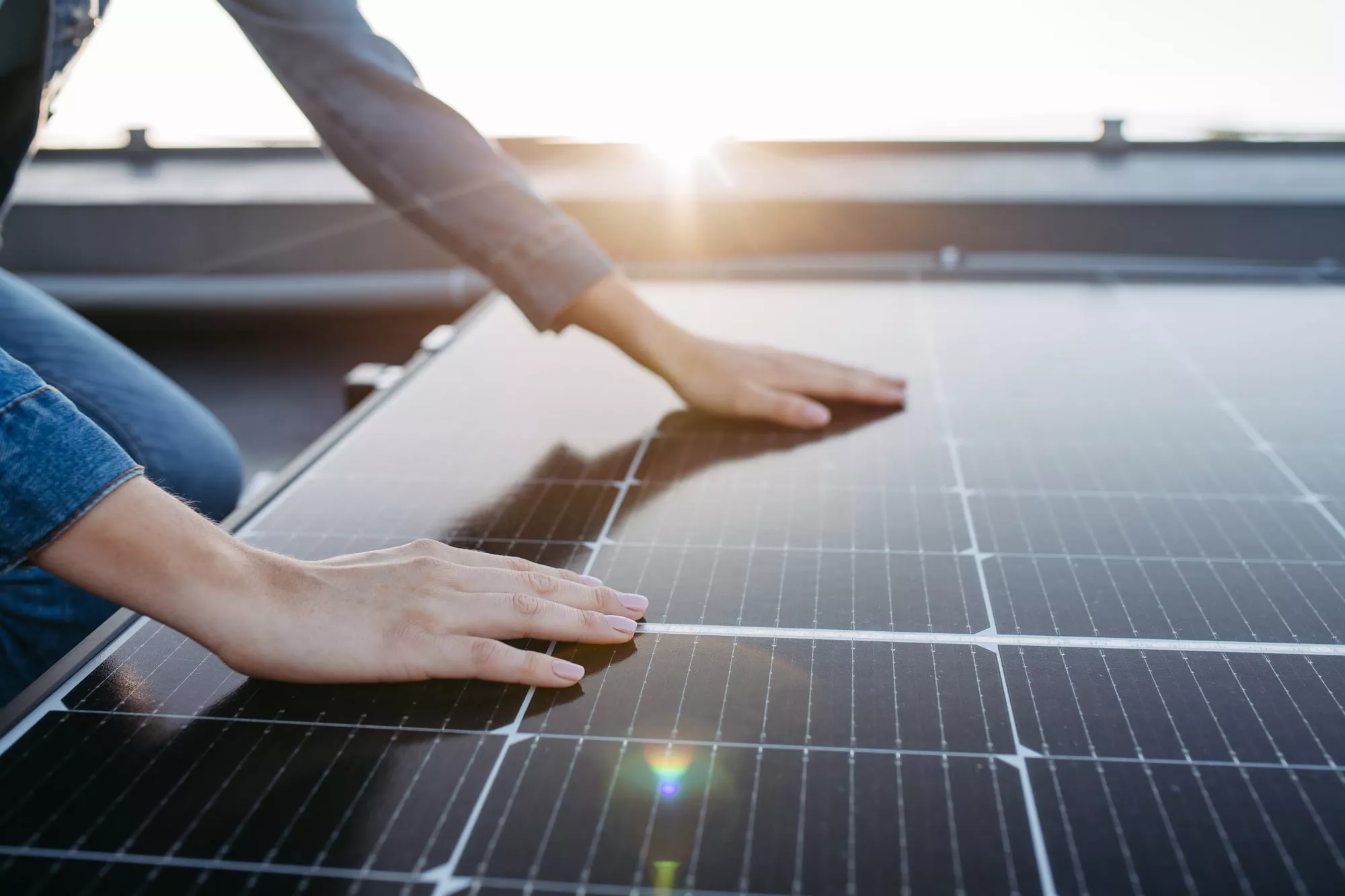
Electrical industry
We are one of few suppliers of cold spraying.
The initial situation
Our clients are often seeking ways of directly applying conductive or solderable metal coatings to components (such as copper to aluminium substrates) without the use of bonding techniques. They also need a quick, easy way of applying large cross-sections for conductors made out of conductive materials in any shape. Electroplated coatings need to be replaced by thicker coatings with better coating quality. Clients prefer fast processes eliminating the long time it takes for coatings to form in an electroplating bath.
Two common applications are the repair of expensive metal rejects and the replacement of more expensive, heavy or mechanically sub-optimum base materials only used because their properties were required on a small component surface.
The solution
Using the cold gas method, we apply a metallic coating which can easily be mechanically finished by grinding, milling and turning. A wide variety of metallic materials can be applied with a thickness from 50µm to several millimetres. Exact geometrical shapes are possible using masking, and in some cases by means of free coating without masking. Ceramic and metallic surfaces can be combined – for example when producing thermal generators.
Unlike electroplating, this method can be performed rapidly without the need for the lengthy chemical formation of the coating. Coatings can then be mechanically finished. Depending on use, coating systems can be produced from the common coating materials copper, nickel, aluminium and silver.
Low-porosity coating
Extremely low-porosity coatings, thus eliminating the need for costly subsequent sealing.
Time-efficient HVAF process
Fast application of carbide materials in high layer thicknesses
Versatile protection
Corrosion and wear protection, especially for heavily loaded pump units.
Specialized coatings
Special carbides to meet the requirements of the industry.
The result
Diese neuen Verfahren bieten Lösungen für gängige Probleme und schaffen Raum für neue Ideen. Wir können metallische Beschichtungen ohne langwieriges Galvanisieren auftragen. Das Aufsprühen von Materialien beschleunigt die Auftragsabwicklung und verkürzt die Projektdauer. Metallische, homogene, reine und porenfreie Beschichtungen können in der gleichen Qualität wie das Ausgangsmaterial aufgebracht werden – und sind zudem hervorragend lötbar.
Da Beschichtungen mit den gewünschten Materialeigenschaften lokal genau dort aufgebracht werden können, wo sie benötigt werden, und durch den Ersatz teurer Grundmaterialien können teure Teile kostengünstiger produziert werden. Darüber hinaus können wir Ausschuss- und Bruchteile aus wertvollen metallischen Werkstoffen wieder in die vorgesehenen Dimensionen bringen.
Your advantages with
Putzier
With over 30 years of experience in thermal spray technology, Putzier Surface Technology brings an unparalleled depth of knowledge and expertise to every project. Our history is a testament to consistency, quality and the pursuit of excellence.
At Putzier Oberflächentechnik, the focus is on the continuous analysis and optimization of our processes. By consistently identifying weak points in applications, we expand and refine our portfolio to always meet the highest industry standards.
Our technically superior processes, especially the HVAF coating process, set standards in the industry. With Putzier surface technology, you not only get first-class solutions, but also a decisive edge over your competitors.
Do you have any questions?


Our opening hours:
Mon - Fri from 7:30 to 16:30.
- Quick response within 48 hours.
- Personal contact.
- All information always at hand.
Thermal spraying is a surface engineering process in which materials are applied in molten or semi-molten form to a surface to protect, regenerate or improve its properties. At Putzier Surface Engineering, this process is used to optimize heavily stressed components, regenerate worn surfaces, and protect vulnerable components from failure.
Thermal spraying is a surface engineering process in which materials are applied in molten or semi-molten form to a surface to protect, regenerate or improve its properties. At Putzier Surface Engineering, this process is used to optimize heavily stressed components, regenerate worn surfaces, and protect vulnerable components from failure.
Thermal spraying is a surface engineering process in which materials are applied in molten or semi-molten form to a surface to protect, regenerate or improve its properties. At Putzier Surface Engineering, this process is used to optimize heavily stressed components, regenerate worn surfaces, and protect vulnerable components from failure.
Thermal spraying is a surface engineering process in which materials are applied in molten or semi-molten form to a surface to protect, regenerate or improve its properties. At Putzier Surface Engineering, this process is used to optimize heavily stressed components, regenerate worn surfaces, and protect vulnerable components from failure.
Thermal spraying is a surface engineering process in which materials are applied in molten or semi-molten form to a surface to protect, regenerate or improve its properties. At Putzier Surface Engineering, this process is used to optimize heavily stressed components, regenerate worn surfaces, and protect vulnerable components from failure.