

Procedure
The term “thermal spraying” covers various spraying processes. They do not compete with each other in their application, but complement each other through their specific process properties.
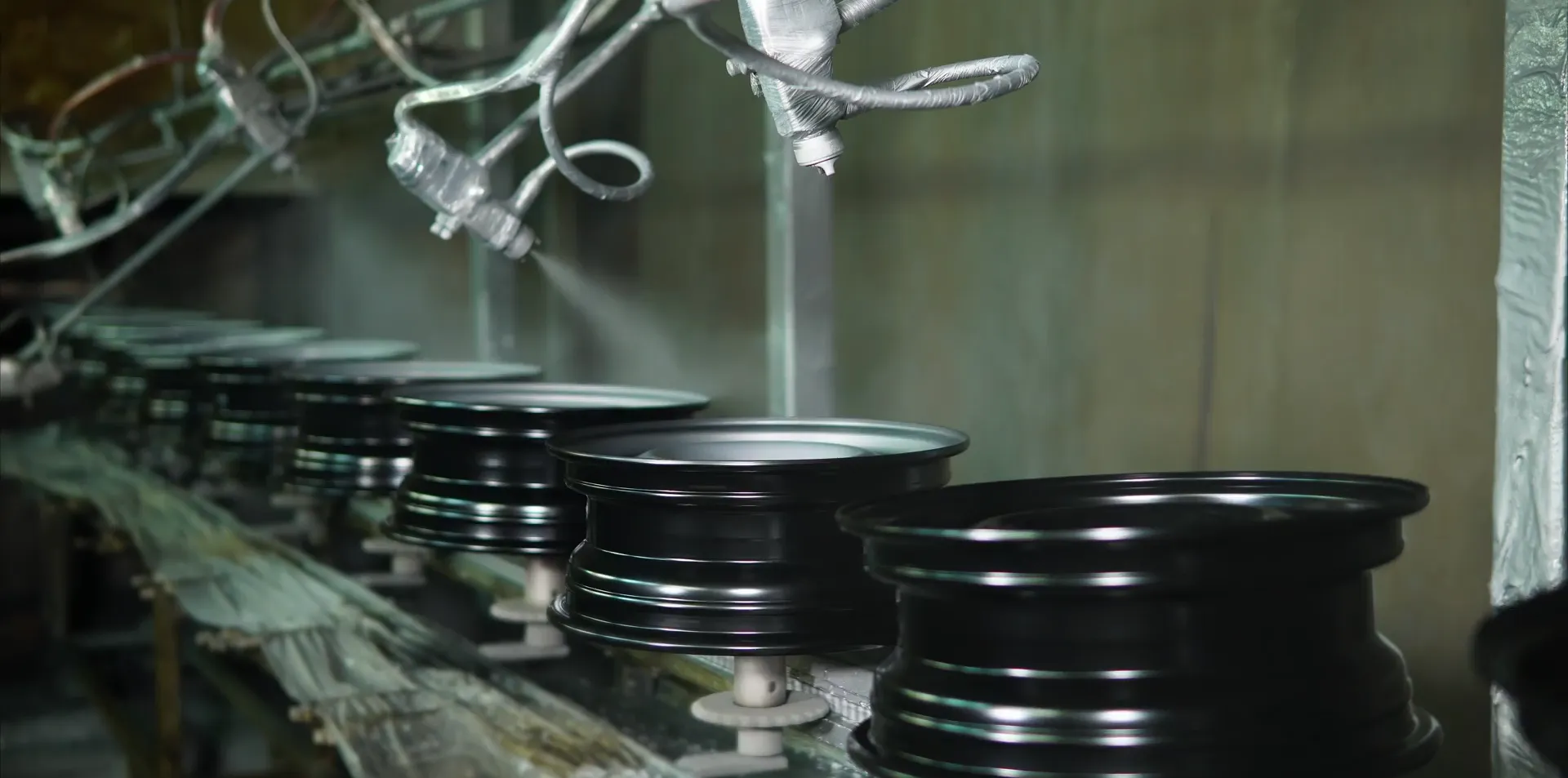
Spraying method for plastering
The spraying process is characterized by a fast gas jet with which the coating materials are accelerated and sprayed onto the component surface. The processes differ in their thermal and kinetic energy and are selected according to which coating material is to be applied.
We provide you with comprehensive advice on which process is optimal for you.
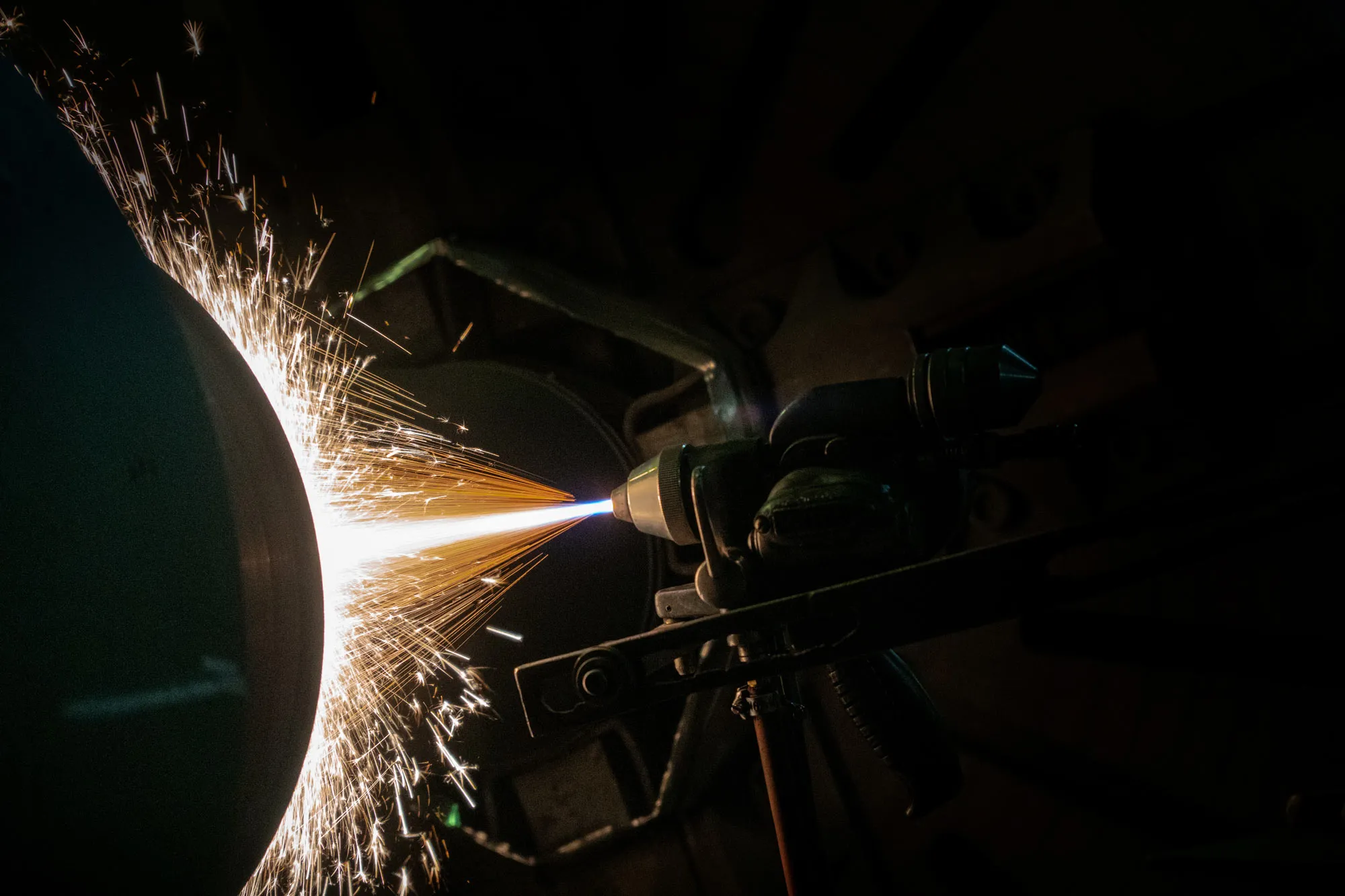
Cold spraying
Cold gas spraying, also known as CGS (Cold Gas Spray), is a modern thermal spray process. It uses kinetic energy to produce oxide-free spray coatings, while keeping the gas temperature below the melting temperature of the material. This minimizes oxidation and maintains the original properties of the coating material. The spray jet reaches speeds of up to 1,000 m/s and can be focused to five millimeters.
Oxide-free coating
The process produces virtually oxide-free spray coatings.
Preservation of material quality
Preservation of the chemical and physical properties of the original material.
High particle velocity
Reaches speeds of up to 1,000 m/s for precise applications.
Focused spray jet
Focusing of the jet to a cross-section of approx. 5mm for targeted coating.
Wire flame spraying
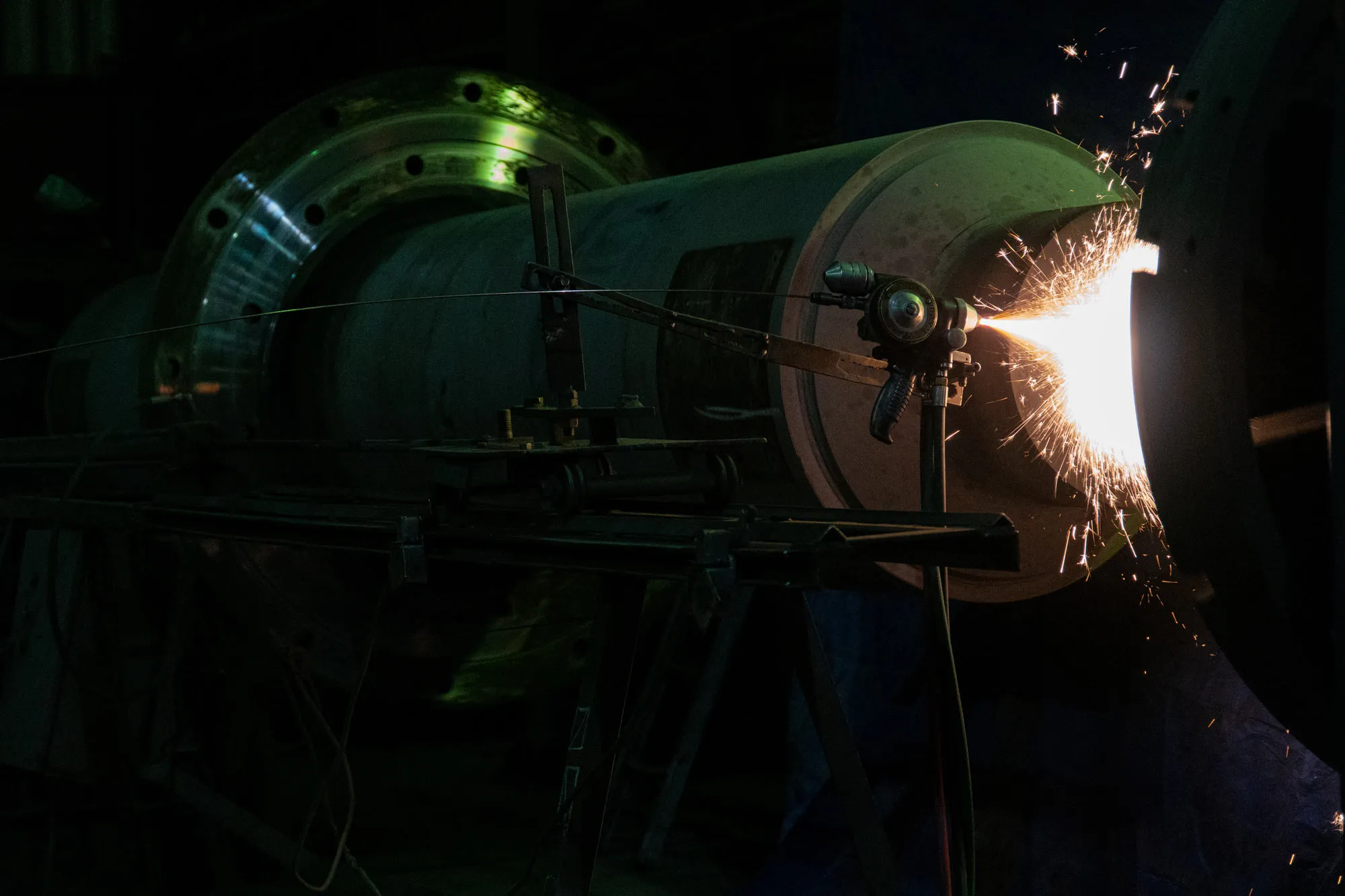
Wire flame spraying is a high-quality process in which wire-shaped coating materials are melted in a fuel gas-oxygen flame and sprayed onto surfaces. It is widely used in the automotive industry, especially for metallic coating systems. The resulting materials show a high similarity to the original material, while being characterized by a lamellar layer structure and increased hardness. Typical coating materials are iron-based alloys, non-ferrous metals and their alloys.

High quality coatingAchieves a very high quality standard of the spray coating.
Versatile application Particularly suitable for metallic coating systems in the automotive industry.
Authentic material qualityThe coatings reflect the properties of the original material.
Wide range of materialsFerrous base alloys and non-ferrous metals from A – Z.
HVOF/HVAF
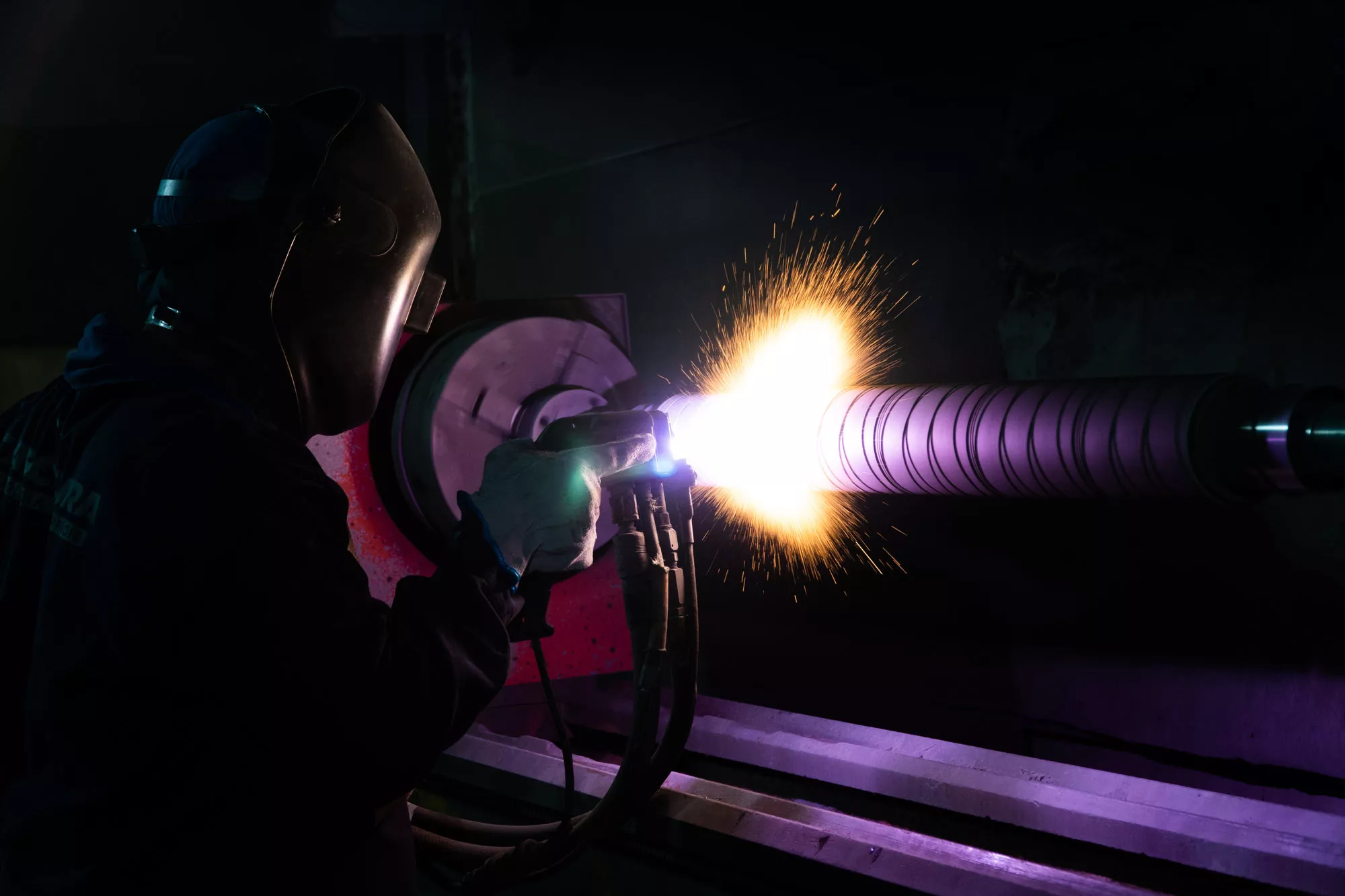
In high velocity oxygen fuel spraying (HVOF), gas burns under high pressure while powdered spray additive is supplied. This results in dense spray coatings with strong adhesive properties. The coatings are thin and precise, with minimal change in the spray additive material. A cooler and faster process, HVAF, uses a fuel gas-air mixture. Main applications are hard chromium replacement coatings and parts for mechanical engineering, petrochemical and chemical machinery.
Dense spray coatings
Creates extremely dense coatings with excellent adhesion properties.
Precise and thin layers
Minimal metallurgical change ensures high dimensional accuracy.
Ideal for hard chrome replacement layers and machine components.
Environmentally friendly production
Offers durability and environmentally conscious production.
Plasma spraying
In plasma spraying, a plasma jet generated by a non-transmitting arc melts the powdered spray additive, which is then applied to the workpiece surface. This plasma burns in various gas mixtures and reaches high velocities. Oxide ceramics such as chromium oxide and aluminum oxide are preferred materials. The process is used in the aerospace and textile industries and for turbine blades.
High-speed plasma
Generated by a special arc for efficient spraying.
Versatile choice of materials
Preferred use of oxide ceramics such as chromium oxide and aluminum oxide.
Precise applications
Ideal for friction wear resistant mating surfaces and thermal barrier coatings.
Cross-industry use
From the aerospace sector to the textile industry.
Powder Flame Spraying
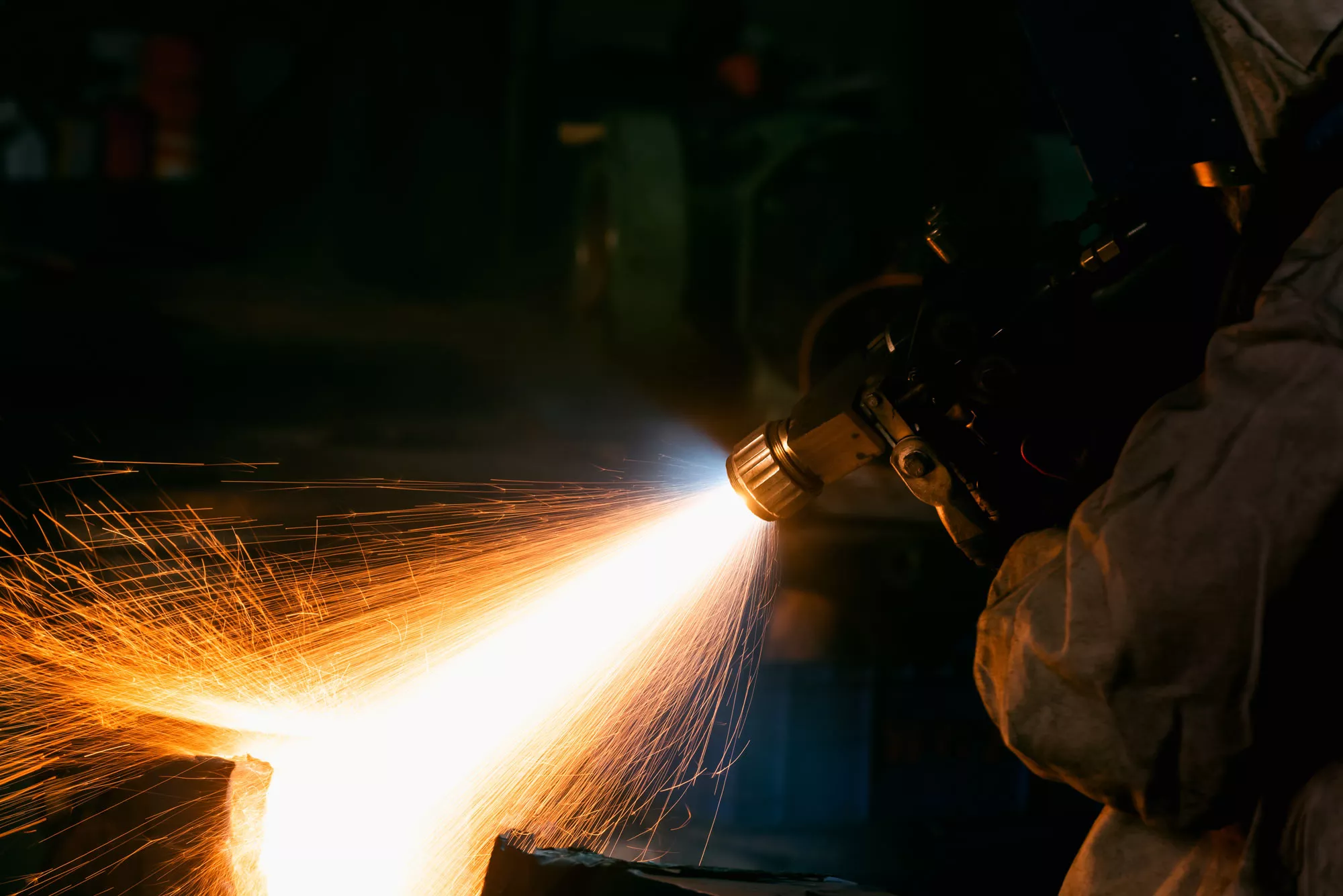
In powder flame spraying, spray additive is melted in an oxy-acetylene flame and applied to the surface. Over 100 materials can be used, including self-fluxing alloys that exhibit high adhesion and hardness after thermal treatment. These alloys are suitable for erosion-resistant coatings on heavily stressed parts and are suitable for certain steels.
Versatile material selection
Over 100 spray additive materials available.
High-quality adhesion
Thermal post-treatment significantly improves the bond.
Increased hardness
Coatings achieve hardnesses of over 60 HRC.
Special applications
Ideal for erosion resistant coatings on loaded tools and parts.
Do you have any questions?


Our opening hours:
Mon - Fri from 7:30 to 16:30.
- Quick response within 48 hours.
- Personal contact.
- All information always at hand.
Thermal spraying is a surface engineering process in which materials are applied in molten or semi-molten form to a surface to protect, regenerate or improve its properties. At Putzier Surface Engineering, this process is used to optimize heavily stressed components, regenerate worn surfaces, and protect vulnerable components from failure.
Thermal spraying is a surface engineering process in which materials are applied in molten or semi-molten form to a surface to protect, regenerate or improve its properties. At Putzier Surface Engineering, this process is used to optimize heavily stressed components, regenerate worn surfaces, and protect vulnerable components from failure.
Thermal spraying is a surface engineering process in which materials are applied in molten or semi-molten form to a surface to protect, regenerate or improve its properties. At Putzier Surface Engineering, this process is used to optimize heavily stressed components, regenerate worn surfaces, and protect vulnerable components from failure.
Thermal spraying is a surface engineering process in which materials are applied in molten or semi-molten form to a surface to protect, regenerate or improve its properties. At Putzier Surface Engineering, this process is used to optimize heavily stressed components, regenerate worn surfaces, and protect vulnerable components from failure.lb Molten form is applied to a surface to protect, regenerate or improve its properties. At Putzier Surface Engineering, this process is used to optimize heavily stressed components, regenerate worn surfaces, and protect vulnerable components from failure.
Thermal spraying is a surface engineering process in which materials are applied in molten or semi-molten form to a surface to protect, regenerate or improve its properties. At Putzier Surface Engineering, this process is used to optimize heavily stressed components, regenerate worn surfaces, and protect vulnerable components from failure.